Client Retention · 13 min read
How Should Dietitians Prioritize Client Follow-Ups Between Appointments?
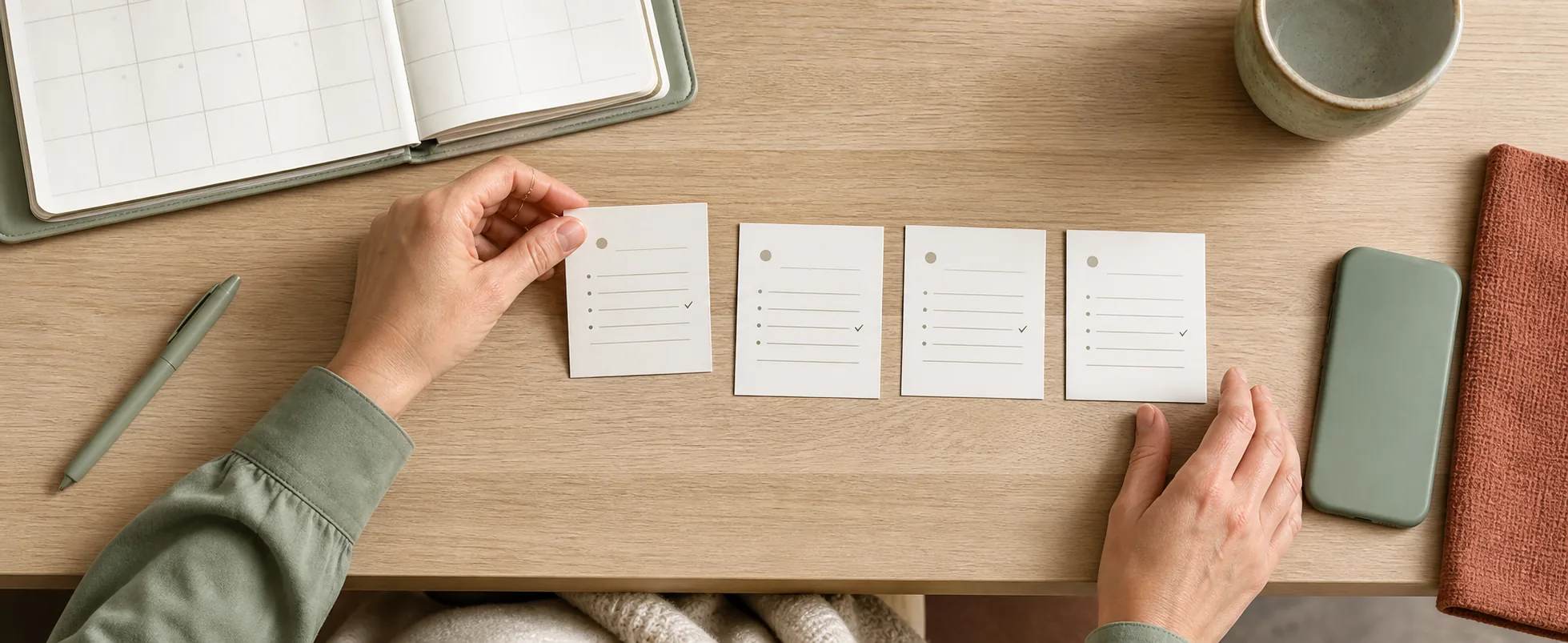
Short answer: prioritize explicit clinical urgency and time-sensitive care-plan actions first. Next, review new or worsening concerns and missed required monitoring. Then address meaningful barriers or engagement changes that may benefit from timely support. Treat missed logs and reduced activity as prompts to inspect—not diagnoses—and always show the practitioner the reason, source data, and ability to override.
A crowded inbox is not a prioritization system. The purpose of triage is to make the next responsible action clear.
| Priority | What belongs here | Appropriate response |
|---|---|---|
| 1. Safety or clinical escalation | Information that meets the practice’s established urgent escalation criteria | Follow the clinical/emergency protocol; do not manage through a routine engagement message |
| 2. Time-sensitive care action | A required review, transition, intervention deadline, or unresolved action that could affect current care | Assign an owner and complete or coordinate the action within the defined timeframe |
| 3. Meaningful new change | New or worsening symptoms, outcomes, intake changes, or monitoring results that need practitioner assessment | Review the source information, contact or coordinate as appropriate, and document the decision |
| 4. Barrier or engagement change | Missed logs, check-ins, messages, or appointments that differ meaningfully from the person’s plan or baseline | Check context and send a supportive, specific follow-up when useful |
| 5. Routine support and optimization | Encouragement, education, plan refinement, stable progress, and non-urgent questions | Batch or schedule without displacing higher-consequence work |
The levels define work order, not medical diagnoses. Each practice needs condition-, credential-, and jurisdiction-appropriate escalation protocols created by responsible clinicians.
A client who has not logged meals for five days is not necessarily in clinical danger. A client who logged every meal may still have information that requires timely assessment.
Do not collapse these two questions:
The first belongs to clinical governance. The second may be an engagement or workflow signal.
The distinction protects clients from two opposite errors:
Software should not invent universal emergency thresholds for nutrition care.
The practice’s clinical leadership should define:
When a record meets that protocol, move it out of the routine retention queue. An automated “we miss you” message is not an appropriate response to a possible emergency.
For example, the NICE eating-disorder guideline requires appropriate physical-risk assessment and acute care for severe medical concerns. It also warns against using a screening tool as the sole basis for determining whether someone has an eating disorder. The broader lesson applies here: a digital signal can prompt qualified review; it cannot replace it.
Not every high-priority task looks alarming.
A follow-up may be time-sensitive because:
The Academy’s Nutrition Monitoring and Evaluation guidance describes monitoring against criteria selected by the RDN and using the results to set up reassessment. That is more defensible than assigning urgency because a generic app threshold changed color.
For each time-sensitive action, the queue should show:
A change becomes useful for prioritization only when it is compared with something relevant.
The interface or worklist should answer:
Avoid ranking clients by a naked number with no source. “Needs review because hydration check-ins fell from the agreed daily schedule to one of seven days” is inspectable. “Risk score: 82” is not.
Patient-generated data can support care when it adds information outside visits, but it remains selected, captured, and shared under real-world constraints. The US health IT office’s patient-generated health data overview emphasizes that patients and caregivers primarily capture these data and decide how to share them.
Common signals include:
None proves that the client is unmotivated or has stopped following care.
Possible explanations include:
A good follow-up names the observation and leaves room for context:
“We had planned three check-ins this week and I can see one. Is the current check-in still useful, or should we simplify it?”
That is more actionable and respectful than “You are falling behind.”
Stable clients still need care. They do not need to compete visually with safety and time-sensitive work.
Routine items may include:
Batching these items can protect attention while preserving continuity. The queue should make scheduled work visible without labeling everything urgent.
| Field | Why it matters |
|---|---|
| Person and responsible practitioner | Prevents ownerless work and wrong-record action |
| Source signal | Lets the reviewer inspect the actual log, check-in, message, appointment, or measurement |
| Time window | Distinguishes a one-off event from a repeated change |
| Comparison | Shows whether the signal is against baseline, target, prior period, or schedule |
| Missing-data state | Prevents absent information from being interpreted as a clinical value |
| Last relevant contact or action | Reduces duplicate outreach |
| Suggested workflow action | Makes the item operational without pretending to decide clinically |
| Resolution choices | Review, contact, escalate, reassign, snooze with reason, or close |
If the system cannot explain why the person appears in the queue, it should not make a high-confidence claim about them.
Before acting on an engagement signal, check for:
Record common false positives and use them to improve the rule. A signal that repeatedly produces no useful action should be revised or removed.
The AHRQ patient-safety primer on alert fatigue describes how a high volume of clinically inconsequential alerts can desensitize users and contribute to important warnings being ignored.
Apply that lesson to nutrition-practice worklists:
More alerts are not better coverage. A small queue with a clear action is safer than a wall of red badges.
Many practices can improve follow-up using clear rules:
If a predictive or AI model is later introduced, require additional controls:
NIST’s AI Risk Management Framework organizes this work as governing, mapping, measuring, and managing risk. Its human-AI guidance stresses that human roles and oversight responsibilities should be explicit. “A human can review it” is not enough if nobody owns the review or can inspect the basis.
For a solo practice or small team, a short routine can keep the queue usable.
The timebox is an operational example, not a clinical standard. Larger or higher-acuity services need staffing and governance appropriate to their care model.
A signal should move through a workflow rather than remain permanently “open.”
| State | Meaning |
|---|---|
| Needs review | New item awaiting practitioner interpretation |
| Contact planned | Owner and channel selected |
| Waiting for response | Contact occurred; next review date set |
| Escalated or coordinated | Routed to the appropriate clinical/team pathway |
| Snoozed with reason | Deliberately deferred until a documented date or event |
| Reassigned | Ownership transferred with context |
| Closed | Resolved, duplicate, not actionable, or no longer relevant—with reason |
This creates an audit trail and stops the same client from being contacted by multiple team members.
The record should show:
AHRQ defines care coordination as deliberately organizing care activities and sharing information among participants so that needs and preferences are known and communicated at the right time. A clear follow-up record is part of that coordination, especially in a multi-provider clinic.
MealCircle is our product. Its retention board is designed to organize observable engagement signals and show why a client was surfaced. It is not intended to diagnose clinical deterioration or replace practitioner judgment.
The product standard behind this article is:
show the source signal, suggest a workflow action, preserve practitioner context, and make override and resolution explicit.
Practices evaluating MealCircle or another platform should test that behavior with missed data, planned breaks, reassignment, duplicate alerts, and real team handoffs—not only a perfect demo patient.
Follow the practice’s clinical escalation protocol first, then address time-sensitive care-plan actions, new or worsening concerns, missed required reviews, and meaningful barriers or engagement changes. Routine encouragement and optimization come after higher-consequence work.
Not by itself. Missing logs can reflect a planned break, travel, illness, technology problems, a changed logging method, burden, or disengagement. Treat the gap as a prompt to review context, not as a diagnosis or proof that the client stopped following the plan.
A score should never be the only reason for a clinical conclusion. If software ranks a caseload, the practitioner should see the source signal, time window, comparison, missing data, and prior actions, and should be able to override, snooze, reassign, or close the item with a reason.
Use a small number of actionable signals, suppress duplicates, define who owns each item, show why it appeared, provide a clear resolution state, and review false positives. Alerts that do not change a decision should be removed or moved out of the urgent queue.
Document the source signal, practitioner interpretation, contact attempt or care action, client response when available, escalation or coordination, next owner, next review date, and why an item was snoozed or closed.
A practical 10-minute food-log review checklist for dietitians: verify the record, scan safety, find patterns, identify barriers, and prepare the next question.
Read →See how nutrition practice management software helps dietitians build meal plans, monitor progress, improve engagement, and run an efficient practice.
Read →Food logs and meal photos can be PHI in a dietitian's care workflow. Learn when HIPAA applies, when it may not, and what to check before choosing an app.
Read →See how MealCircle connects plans, patient activity, and follow-up without adding another disconnected tool.