Business · 3 min read
How to Price Nutrition Meal Plans: A Practical Guide for Dietitians
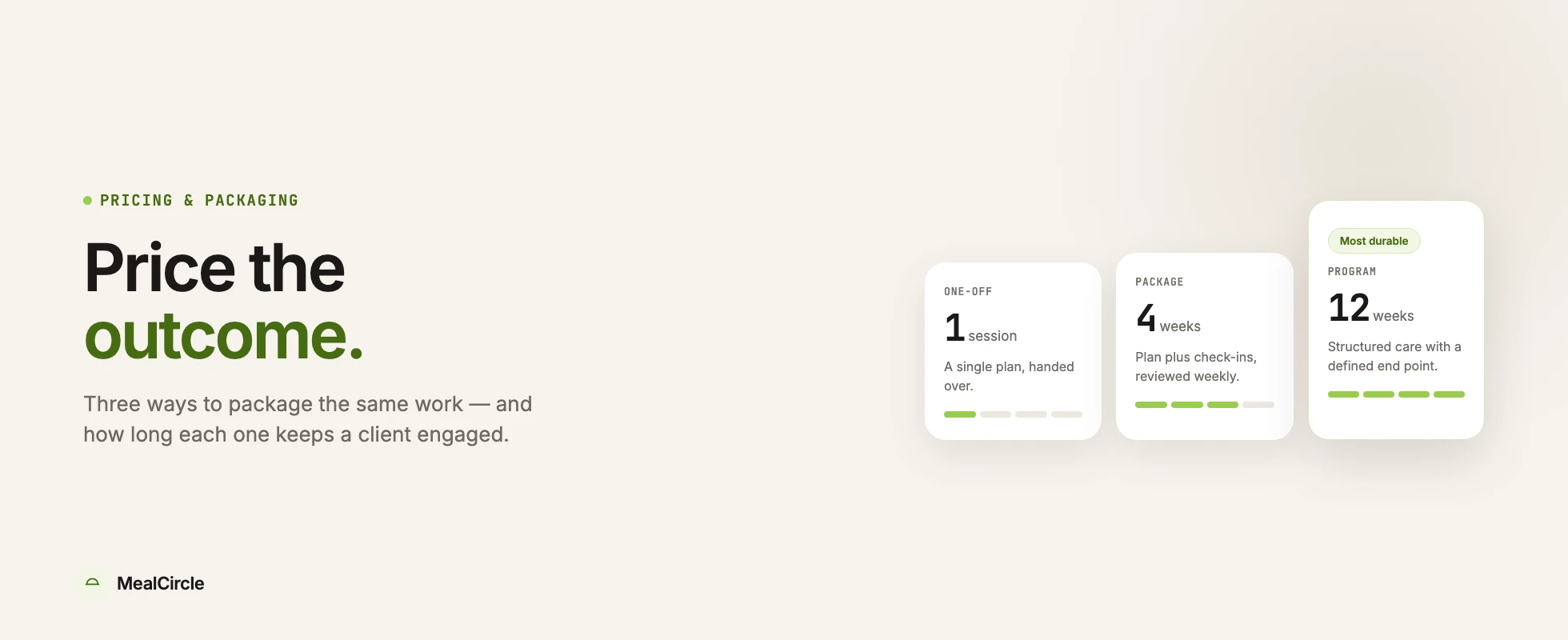
Pricing meal plans is one of those deceptively simple business questions that can eat up an entire afternoon.
Charge too little, and the work starts leaking into nights and weekends. Charge too much without explaining the value, and clients may compare your plan to a free PDF they found online. The trick is to price the full service, not just the document.
If you want the shorter buyer-intent version, we also wrote a dedicated guide on how much dietitians should charge for meal plans. This article goes deeper on pricing models and how to package the work.
Charging hourly for meal plan creation can accidentally punish efficiency. If it takes you three hours to build a plan manually, the price feels high. If you use meal planning software for dietitians and build a strong draft much faster, the hourly model can make your expertise look cheaper.
For deliverables, it is usually better to price the outcome: personalization, planning, education, grocery guidance, and follow-up.
This model involves selling a single, specific meal plan, such as a 7-day starter plan or a condition-focused meal plan template.
Bundle the meal plan with consultation, food journal review, follow-up calls, and ongoing secure messaging with clients.
When you digitize your nutrition practice, the time spent on formatting, copying, grocery lists, and plan updates can drop sharply. A faster drag-and-drop plan builder with saved templates, client preferences, and connected follow-up makes the work easier to deliver without making it feel generic.
This is why nutrition software matters for pricing. It lets you stop selling typing time and start selling the strategy around the plan. A connected dietitian client portal also gives clients a clearer place to review the plan, log meals, and ask questions between sessions.
Related reading: free meal plan template for dietitians, best nutrition software for dietitians, and nutrition client retention strategies.
Meal plan pricing depends on credentials, market, personalization, revisions, and support. A simple template should be priced differently from a custom plan bundled with follow-up.
Packages are often easier to sell and deliver when the client needs ongoing support, because they include the meal plan, education, follow-up, and adjustments.
A monthly plan update or maintenance offer can work well when clients need ongoing accountability, but the scope should be clear so both sides understand what is included.
A practical pricing guide for dietitians selling meal plans, packages, plan updates, and ongoing nutrition support.
Read →Stop undercharging. Learn how to structure your pricing packages to grow your income and attract committed clients.
Read →Learn what calorie, macro, protein, and nutrition calculators can estimate, where they fall short, and when a dietitian meal plan is a better fit.
Read →See where MealCircle fits, where it does not, and whether retention-focused practice management matches your care model.