Business · 2 min read
Pricing Strategies for Nutritionists: How to Charge What You're Worth
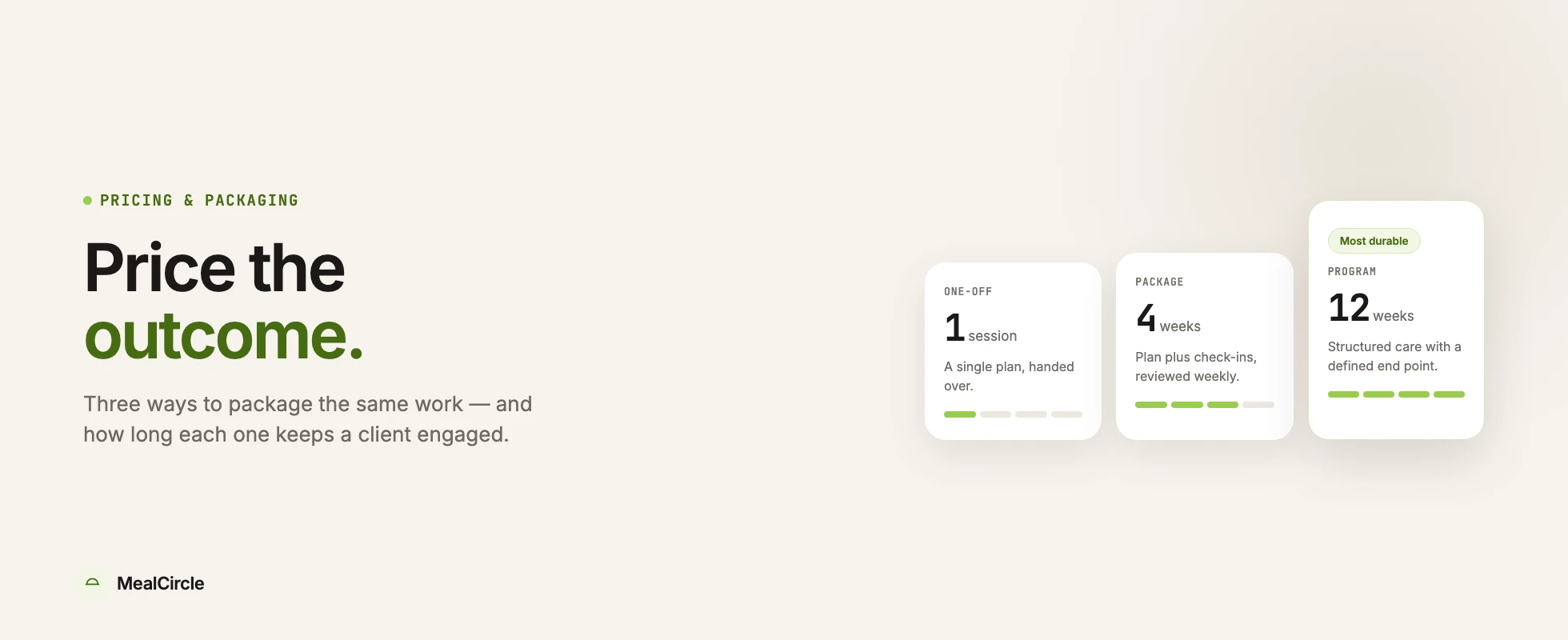
One of the biggest challenges for nutritionists effectively pricing their services. Charge too much, and you worry about scaring away clients. Charge too little, and you burn out while struggling to pay the bills.
Finding the sweet spot isn’t just about math; it’s about psychology and value.
Hourly billing limits your income to the number of hours you can work. It also misaligns incentives—clients might feel you’re dragging things out, or they might rush through sessions to save money.
Instead, create packages.
Don’t just sell “1 hour consultation + meal plan.” Sell “More energy, better sleep, and a healthy relationship with food.”
Clients pay for results. When you frame your services around the transformation they will experience, price becomes less of an objection.
Offer three tiers of service. This uses the “Goldilocks Effect”—most people will choose the middle option, which should be your core offering. Delivering these tiers consistently is far easier with nutrition practice management software handling packages, billing, and follow-up in one place.
If you’re booked out, it’s time to raise your prices. A good rule of thumb is to raise prices by 10-20% whenever you reach 80% capacity. Existing clients can stay on their current rate for a “loyalty period” (e.g., 3-6 months), but new clients pay the new rate.
Remember, your expertise helps people live longer, healthier lives. That is valuable. Charge accordingly. Learn how to scale your practice to maximize revenue while maintaining quality care, and explore our pricing options.
In the US market, a nutritionist’s monthly retainer typically ranges from $150 to $500+ depending on the level of support. Solo practitioners often charge $200-$350/month for ongoing coaching with weekly check-ins and updated meal plans, while specialized clinical dietitians can command $400-$600+. Rates vary significantly by region and specialty.
Packages are strongly preferred over hourly billing. Packages align incentives — clients commit to their health journey, and nutritionists get predictable income. Hourly billing punishes efficiency: the faster you work with software, the less you earn.
Raise your rates when you are consistently booked at 80%+ capacity for two or more months. A 10-20% rate increase for new clients while honoring existing rates for a loyalty period of 3-6 months is a standard and professional approach.
A practical pricing guide for dietitians selling meal plans, packages, plan updates, and ongoing nutrition support.
Read →Learn how to scale a nutrition practice with better meal planning systems, client retention, nutrition software, and repeatable workflows.
Read →Learn how to grow your client base without sacrificing your personal time or well-being.
Read →See where MealCircle fits, where it does not, and whether retention-focused practice management matches your care model.