Business · 2 min read
How to Scale Your Nutrition Practice: A Practical Playbook
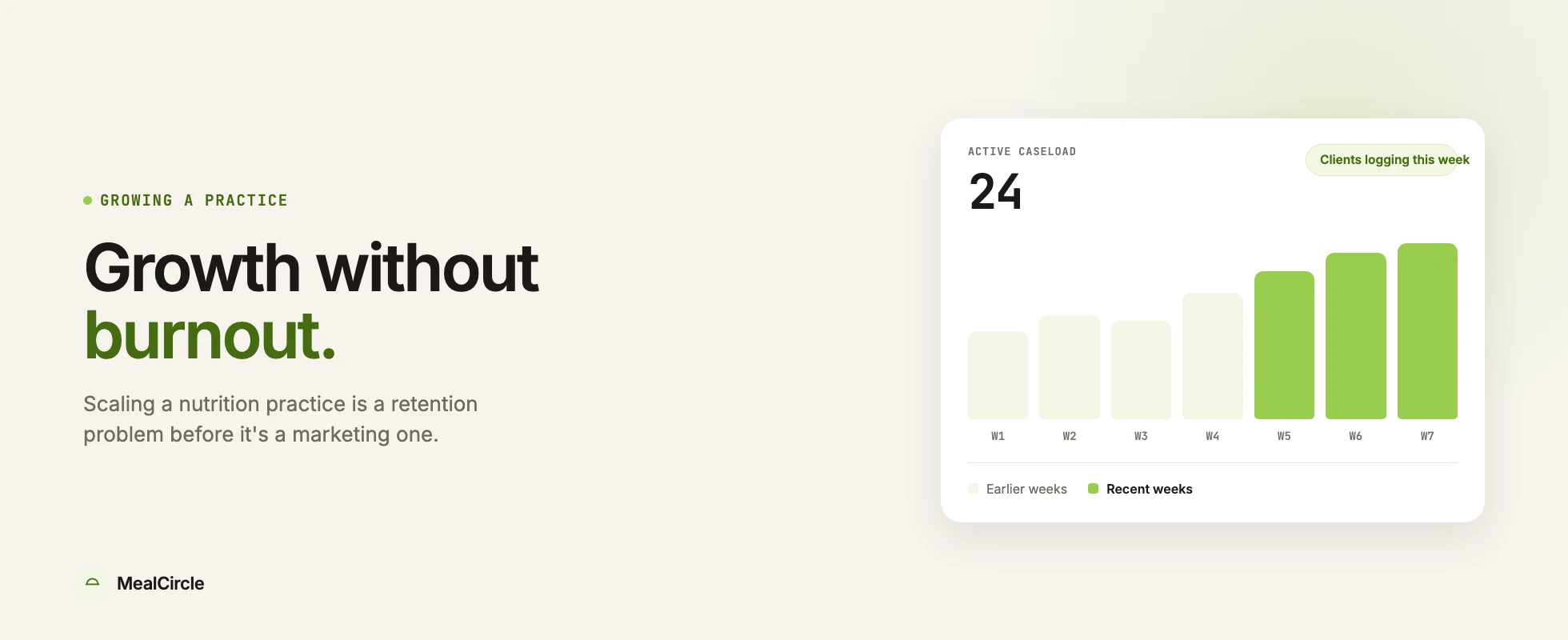
Scaling a nutrition practice sounds exciting until every new client adds another intake form, meal plan, check-in, invoice, and follow-up thread.
Growth is not just a marketing problem. It is an operations problem.
The biggest scaling bottleneck is often the practitioner.
If every meal plan, reminder, food journal review, and billing question depends on you remembering it manually, the practice will eventually hit a ceiling.
To break through that ceiling, start with the repeatable work:
This is where nutrition practice management software and meal planning software for dietitians can support growth without adding more manual admin.
Hiring only helps if the work is already organized.
Before bringing on another dietitian or assistant, document your core workflows:
A shared system makes delegation possible. Without it, hiring can simply spread the confusion across more people.
Growth does not have to mean working every weekend.
Start by making your best work repeatable: stronger templates, clearer follow-up, a better dietitian client portal, and client retention software that keeps clients supported after the first plan.
Related reading: best nutrition software for dietitians, how long it takes to make a meal plan, and client retention strategies.
The number depends on service depth, appointment frequency, admin support, and systems. A solo practitioner offering high-touch care needs stronger templates, follow-up workflows, and software before adding volume.
Start with repeatable meal plan templates, appointment reminders, food journal check-ins, onboarding forms, and recurring package billing.
Learn how to grow your client base without sacrificing your personal time or well-being.
Read →Stop undercharging. Learn how to structure your pricing packages to grow your income and attract committed clients.
Read →Actionable marketing strategies for dietitians and nutritionists looking to quickly scale their client roster and book out their practice.
Read →See how MealCircle connects plans, patient activity, and follow-up without adding another disconnected tool.