Retention · 3 min read
3 Practical Strategies to Improve Nutrition Client Retention
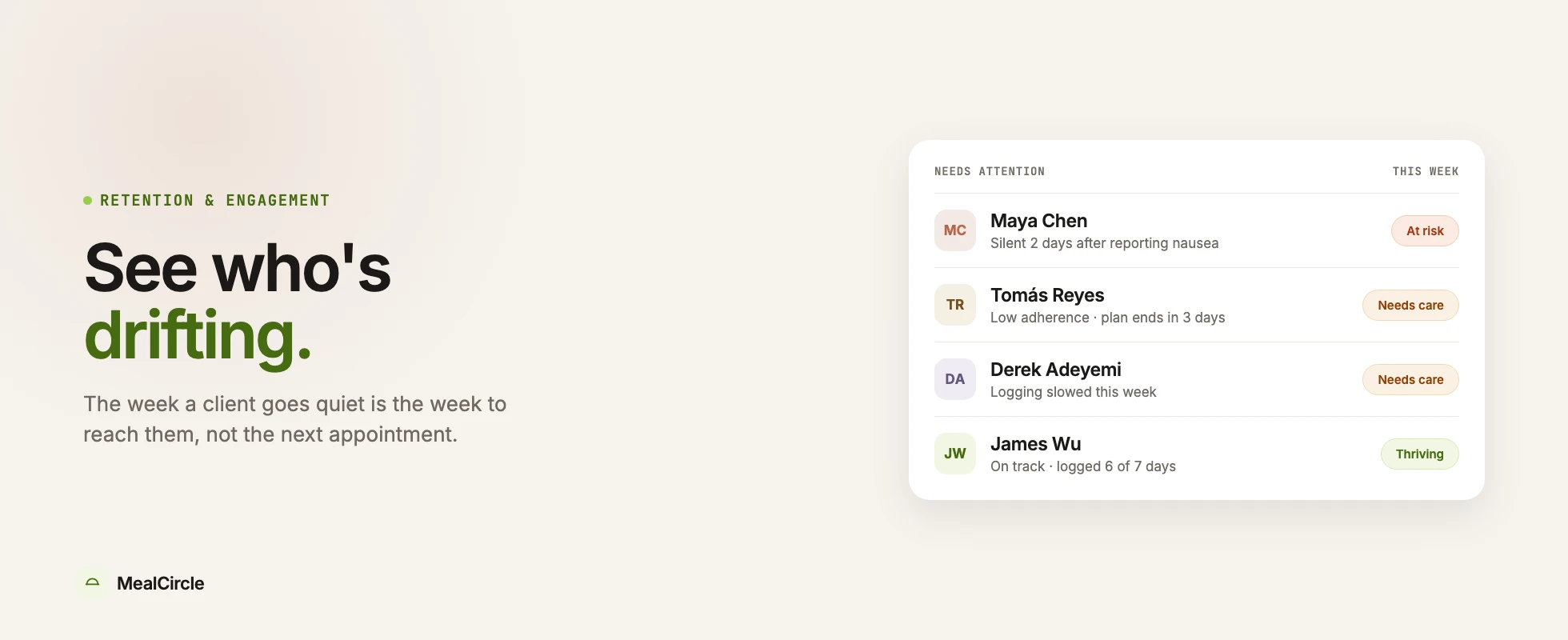
Most nutrition practices spend a lot of energy getting new clients. Retention gets less attention, even though the quiet moments between sessions are often where clients decide whether to continue.
The goal is not to send more messages for the sake of it. The goal is to make clients feel supported before they drift.
Weight, labs, symptoms, and habits often shift slower than clients expect. If progress is measured only by the biggest outcome, clients can miss the small signs that the plan is working.
Strategy: Shift the frame to behavioral wins.
Did they eat breakfast three days in a row? Did they use a food journal template honestly instead of perfectly? Did they prep lunches once this week after months of skipping them?
Name those wins. A short message inside a dietitian client portal can make the client feel seen without creating another scattered email thread.
Clients who feel seen in the small moments stay engaged through the hard ones.
Clients often assume they are the only person struggling with late-night snacking, skipped meal prep, or inconsistent logging. That feeling can make them disappear before they ask for help.
Strategy: Create a sense of collective progress, even in a 1-on-1 coaching model.
Community does not need to be loud. Even a small shared touchpoint can remind clients they are still in the process.
Some clients drop off because they feel “finished.” They learned the basics, got a meal plan, or hit an early goal. If there is no next step, renewal feels optional.
Strategy: Design your service as a continuous journey, not a fixed program.
Structure your offering into distinct phases:
Introduce the next phase before the current one ends. A lighter maintenance offer can also help clients who no longer need full support but still want accountability.
Retention is about useful touchpoints. Meal plans, food journal review, secure messaging, and follow-up reminders should work together so the client does not fall through the cracks. A retention board that ranks who’s drifting — and why — turns that from a memory game into a two-minute morning routine. Use our five-level follow-up prioritization framework to separate urgent or time-sensitive care actions from routine engagement support.
Related reading: why nutrition clients stop logging meals, what is a nutrition patient portal, and how to scale your nutrition practice.
Retention varies by offer, price, client goal, and follow-up model. Practices with clear next steps, structured check-ins, and maintenance options usually have a stronger chance of keeping clients engaged.
Clients often drop off when progress feels unclear, follow-up is inconsistent, logging feels like a chore, or they do not understand the next phase of care.
Keep clients motivated by celebrating behavior wins, reviewing food journals without shame, simplifying the next step, and showing how each phase connects to their larger goal.
A practical guide for dietitians on why clients stop logging meals, how to reduce food journal friction, and how to follow up without shame.
Read →A practical pricing guide for dietitians selling meal plans, packages, plan updates, and ongoing nutrition support.
Read →Learn how to scale a nutrition practice with better meal planning systems, client retention, nutrition software, and repeatable workflows.
Read →See how MealCircle connects plans, patient activity, and follow-up without adding another disconnected tool.