Nutrition Tools · 3 min read
Calorie Calculator vs Nutrition Calculator vs Dietitian Meal Plan
Calculators are popular because they give quick answers.
Type in your height, weight, age, goal, and activity level, and a number appears. It feels tidy. It feels objective. It feels like the work has started.
And sometimes, that is enough for a starting point.
But a calorie target is not a meal plan. A macro split is not a coaching strategy. A recipe nutrition estimate is not the same thing as knowing what a client will actually eat on a tired Wednesday.
Here is how to think about calorie calculators, nutrition calculators, and dietitian-led meal plans.
A calorie calculator estimates daily energy needs.
It usually uses inputs like:
The result is an estimate. It can help create a rough starting target for weight loss, maintenance, or weight gain.
The problem is that formulas do not know the client. They do not know appetite, sleep, stress, medications, injury history, food access, eating patterns, or whether the client has tried six plans before and feels exhausted by all of them.
A nutrition calculator may go broader than calories.
It might estimate:
These tools can be useful, especially for education and planning. But the numbers still need interpretation.
For example, a free macro calculator might suggest a protein target. A dietitian helps translate that into breakfast, lunch, snacks, budget, preferences, and follow-up adjustments.
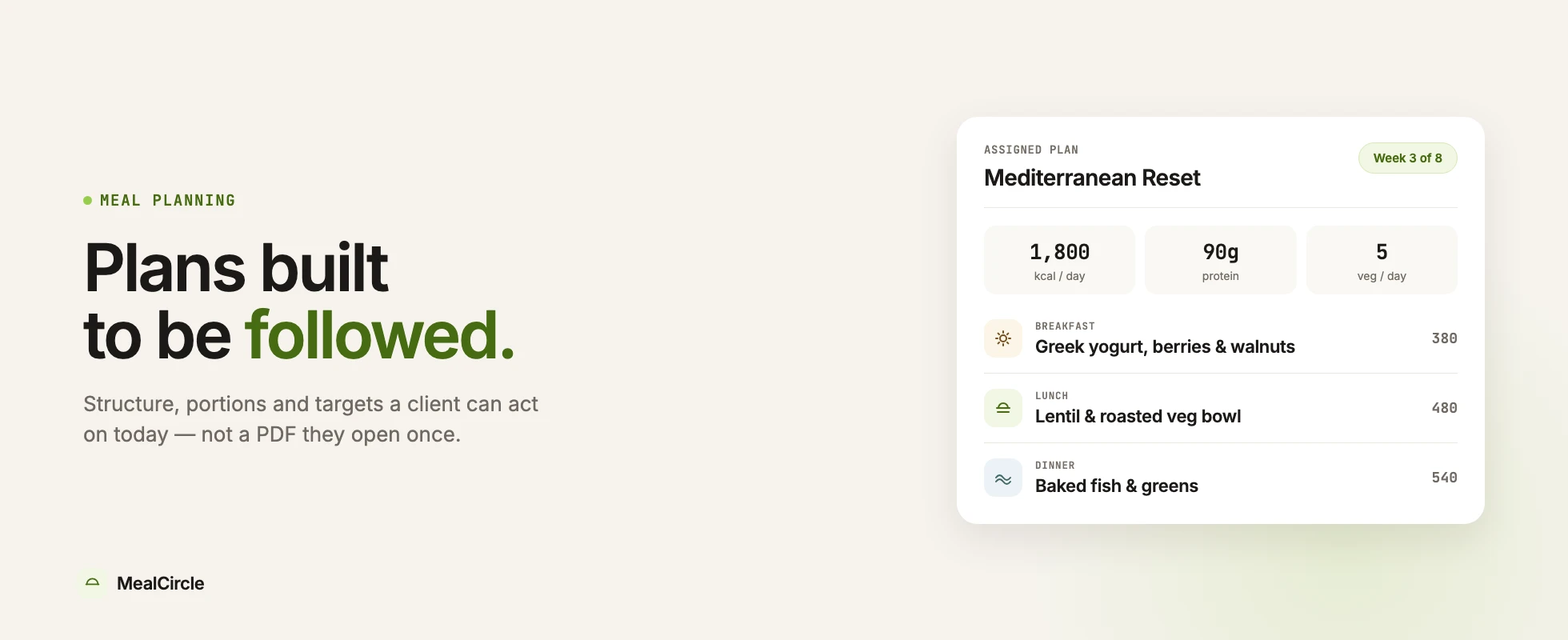
A dietitian meal plan connects targets to behavior.
It answers questions calculators cannot:
The value is not just the meal plan. The value is the reasoning behind it and the follow-up after it.
Calculators can be useful for:
They are especially helpful when a client needs a simple reference point before deeper work begins.
Calculators struggle with:
They also tend to make nutrition look more precise than it really is. A target can be useful without being treated like a magic number.
Use calculators as inputs, not instructions.
A good workflow might look like this:
That loop is where software can help. A meal plan builder that connects planning, logging, and follow-up makes it easier to move from estimate to action.
Calculators answer, “What might the number be?”
Dietitians answer, “What should we do with that number for this person?”
Both can be useful. But if the goal is lasting change, the calculator is only the beginning.
Calorie calculators provide estimates based on formulas and user inputs. They can be useful starting points, but they cannot fully account for medical context, habits, preferences, adherence, or changes over time.
A calorie calculator usually estimates daily energy needs, while a nutrition calculator may also estimate macros, protein, nutrients, recipe values, or meal-level breakdowns.
A dietitian meal plan is better when the client needs personalization, clinical judgment, behavior support, food preferences, follow-up, or adjustments based on real-life progress.
A dietitian-friendly guide to meal plan templates, including what to include, when templates help, and when your practice needs software instead.
Read →Foodzilla vs NutriAdmin in 2026: compare meal planning, client portals, food logging, practice tools, HIPAA options, and current pricing.
Read →A practical pricing guide for dietitians selling meal plans, packages, plan updates, and ongoing nutrition support.
Read →See how MealCircle connects plans, patient activity, and follow-up without adding another disconnected tool.