Client Portal · 4 min read
What Is a Nutrition Patient Portal?
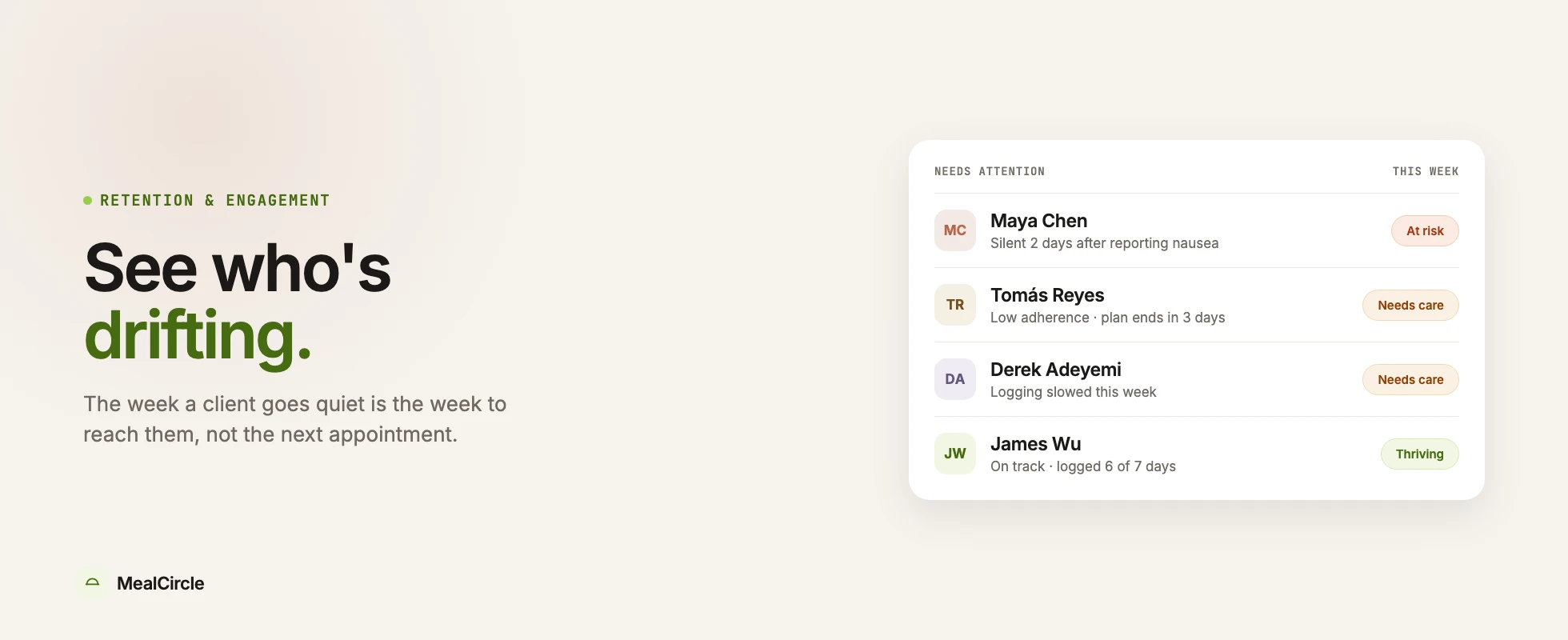
Most people hear “patient portal” and think of lab results, appointment summaries, or a hospital login they use twice a year.
Nutrition care needs something more active.
A nutrition patient portal is not just a place to store documents. It is a shared space where the client and dietitian can keep the work moving between sessions.
A useful portal may include:
The point is simple: clients should know where to go, and dietitians should not have to chase context across five different tools.
The words depend on the setting.
Hospitals, clinics, and medical practices often use “patient portal.” Private practices, coaching businesses, and wellness brands often use “client portal.”
For nutrition practices, the actual question is not which label sounds better. It is whether the portal supports the care model.
Can the client see the plan? Can they log what happened? Can the dietitian review the full client progress history before the follow-up? Can the conversation continue without getting scattered?
That is what matters.
Email works until it does not.
The meal plan is in one thread. The intake form is an attachment. The client sends a food log as a photo. Follow-up notes live in another system, and none of it connects to secure client messaging. Then appointment day arrives, and everyone spends the first ten minutes reconstructing the story.
A portal reduces that friction by giving the practice a shared place for care delivery.
Nutrition progress depends on what happens between sessions.
A portal can help by showing:
This gives the dietitian a better starting point for the next conversation.
Instead of “How did it go?” the follow-up can begin with, “I noticed breakfast went well, but lunch disappeared after Tuesday. What happened there?”
That is a much more useful conversation.
Choose a portal that supports the way you actually work:
If the portal looks impressive but clients avoid it, it will not help your practice.
MealCircle’s dietitian client portal is built around nutrition workflows: meal plans, logging, client communication, and follow-up.
The goal is not to create another place for clients to forget. The goal is to make the next step easier to find.
A nutrition patient portal should make care feel more connected, not more complicated.
If your clients know where to go and your team knows what happened since the last session, follow-up becomes sharper. And in nutrition care, sharper follow-up is often where the real progress begins.
Before choosing a portal, confirm how it differs from the practice’s EHR or client-management system, which records it stores, how clients are onboarded, what happens when someone leaves the practice, and whether the vendor will sign the contracts required for your jurisdiction. A portal is useful only when the practice can explain both the client experience and the data boundary.
A nutrition patient portal is a secure online space where clients or patients can access meal plans, complete forms, log meals, message their dietitian, review tasks, and prepare for follow-up.
The terms often overlap. Medical settings usually say patient portal, while wellness and private practices may say client portal. For nutrition care, both usually refer to a shared digital space for care delivery.
A client portal helps keep plans, logs, messages, and follow-up in one place, which reduces scattered communication and makes ongoing nutrition support easier to manage.
Compare 7 food journal apps for dietitians in 2026, including Cronometer and MyFitnessPal, based on practitioner workflows and patient follow-up.
Read →Foodzilla vs NutriAdmin in 2026: compare meal planning, client portals, food logging, practice tools, HIPAA options, and current pricing.
Read →Compare leading EHR options for dietitians in 2026, including Healthie, Kalix, and Practice Better, plus when a full EHR may be unnecessary.
Read →See how MealCircle connects plans, patient activity, and follow-up without adding another disconnected tool.