Client Tips · 2 min read
5 Meal Prep Hacks for Busy Professionals (Share These With Your Clients)
The number one reason clients fall off their nutrition plan? “I didn’t have time.”
We hear it every day. But with a few strategic hacks, even the busiest executive can stick to a healthy regimen. Here are the tips we share with our high-performance clients.
Don’t prep full meals; prep components.
Now you can mix and match these throughout the week with different sauces (teriyaki, tahini, salsa) to avoid “leftover fatigue.” Sizing the protein and grain portions to a client’s daily macro targets keeps the batch aligned with their goals.
Mason jar salads are trendy for a reason—they work. The trick is the order:
This keeps the greens crisp for up to 4 days.
Smoothie packs are a game changer. Pre-portion fruit, spinach, and protein powder into ziplock bags. In the morning, just dump into the blender, add liquid, and blend. No measuring, no mess.
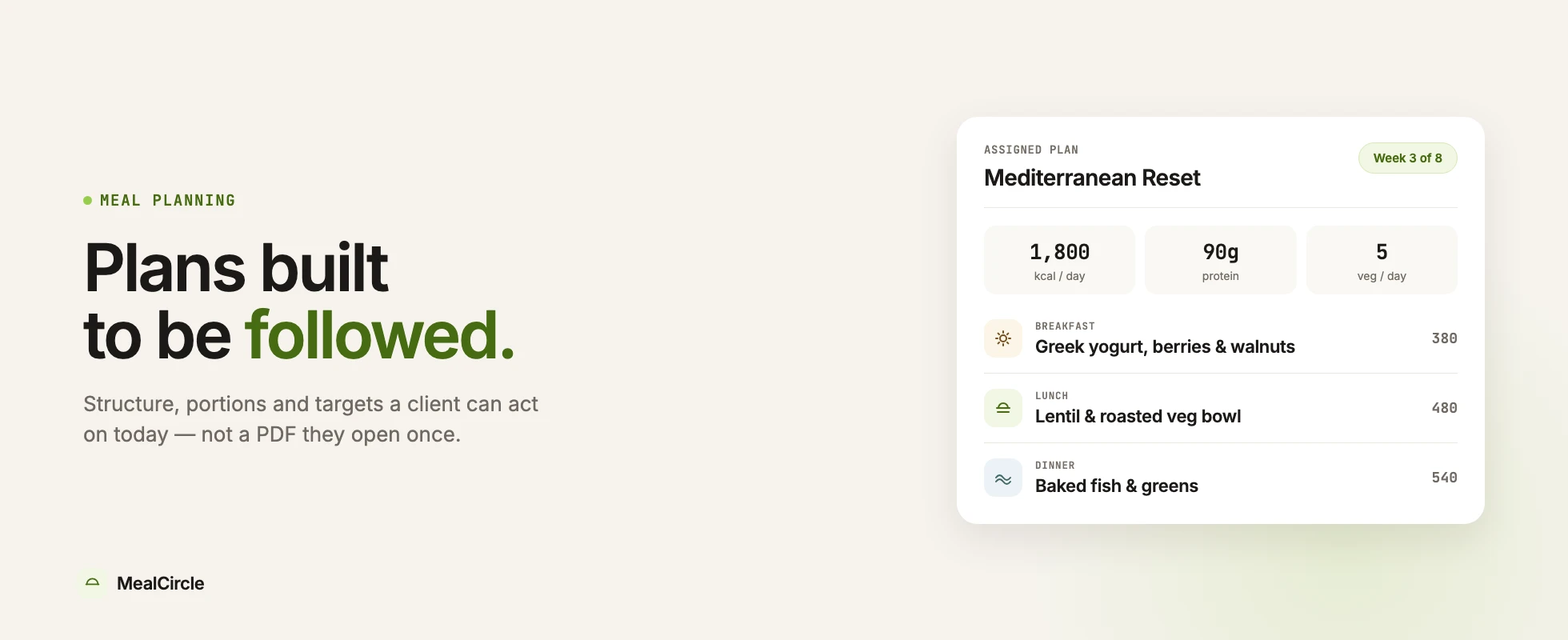
Tools like MealCircle generate shopping lists based on the meal plan your dietitian builds, so nothing on the plan gets forgotten at the store — and grocery trips get meaningfully faster.
Dinner should always be lunch for the next day. It cuts your cooking load in half instantly.
Busy professionals stick to nutrition plans by shifting from full-meal prep to component-based batch cooking, using jar salads that keep for 4 days, leveraging freezer smoothie packs for frictionless mornings, and cooking dinner portions that double as next-day lunch.
Effective meal prep for a full week should take 60-90 minutes maximum. Using the component method — roasting vegetables, cooking grains, and grilling proteins separately to mix-and-match — dramatically reduces time compared to cooking individual meals from scratch.
The easiest foods to batch cook weekly are roasted mixed vegetables (35 minutes), cooked quinoa or brown rice (20 minutes), grilled chicken breast or baked tofu (25 minutes), and hard-boiled eggs. These four components can create 12+ distinct meal combinations.
Foodzilla vs NutriAdmin in 2026: compare meal planning, client portals, food logging, practice tools, HIPAA options, and current pricing.
Read →A practical pricing guide for dietitians selling meal plans, packages, plan updates, and ongoing nutrition support.
Read →Learn what calorie, macro, protein, and nutrition calculators can estimate, where they fall short, and when a dietitian meal plan is a better fit.
Read →See how MealCircle connects plans, patient activity, and follow-up without adding another disconnected tool.